Blogging is still one of the most reliable ways to build an online income asset — a website that keeps earning from articles you wrote months or years ago. But it isn’t passive at the start. The blogs that make money pick the right niche, publish genuinely helpful content and treat the site like a business.
This guide walks you through how to start a blog and make money, from choosing a niche and web hosting to your first ad and affiliate income.
Key takeaways
- Choose a niche where advertisers spend money — finance, software, careers, insurance, education and B2B pay the highest ad rates.
- Use self-hosted WordPress on reliable web hosting with a lightweight theme for speed.
- Expect 6–12 months of consistent publishing before meaningful income.
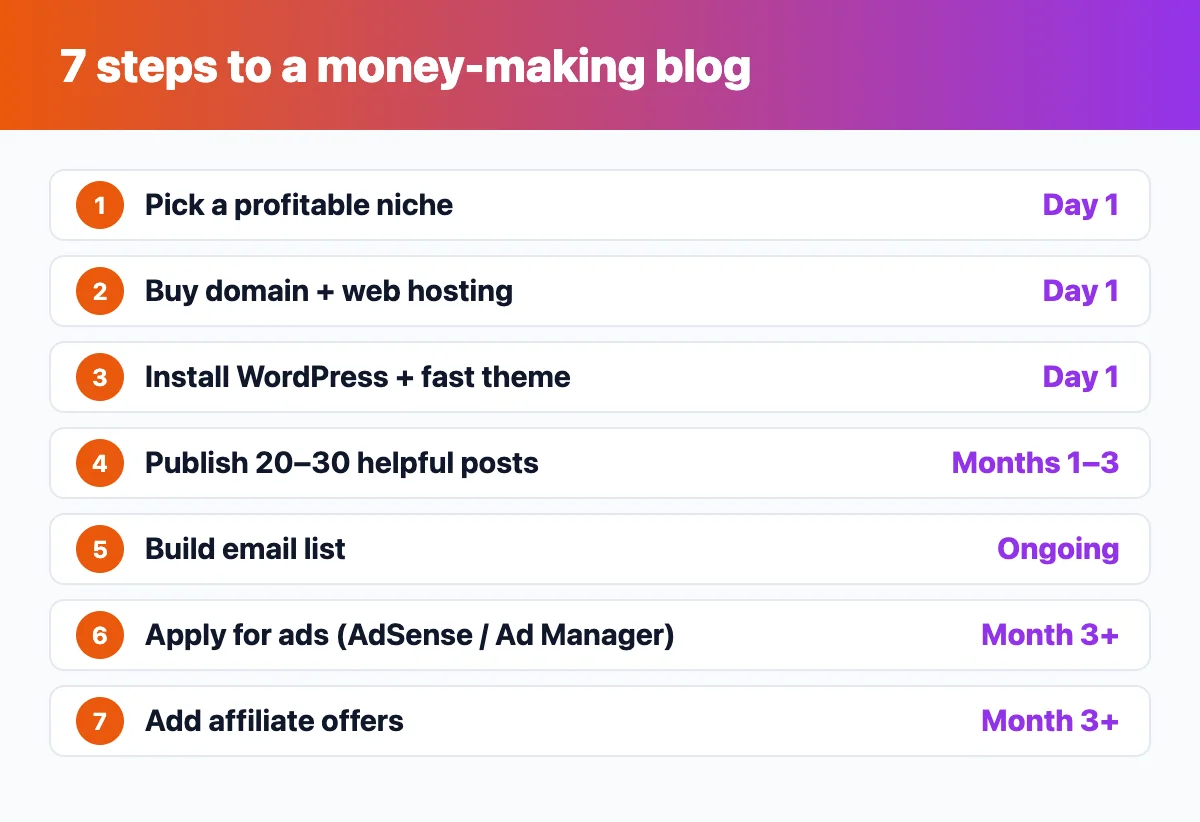
Step 1: Choose a profitable blog niche
Your niche determines how much each visitor is worth. Ad networks pay more when advertisers compete for your audience. Niches like personal finance, insurance, software, careers and online education tend to earn far more per 1,000 visitors (RPM) than entertainment or general lifestyle blogs.
A good niche sits at the overlap of three things: topics you can write about credibly, an audience with real problems, and products or services that audience buys.
Step 2: Pick a domain name and web hosting
Choose a short, brandable domain (a .com is still ideal). For hosting, look for:
- Fast servers with built-in caching (LiteSpeed or Nginx-based hosting is a plus)
- Free SSL certificate
- Daily backups
- Data centers near your audience
- Good support and an easy upgrade path
Cheap shared hosting is fine to start; move to managed WordPress or cloud hosting as traffic grows.
Step 3: Install WordPress and a fast theme
Self-hosted WordPress gives you full control over ads and monetization. Pair it with a lightweight theme such as GeneratePress, Kadence or Astra, and keep plugins to a minimum. Page speed affects both your Google rankings and your ad revenue.
Step 4: Create the essential pages
Before applying to ad networks, publish an About page, a Contact page and a Privacy Policy that explains cookies and advertising. These build trust with readers and with ad networks.
Step 5: Write content that ranks
- Do keyword research. Target specific questions people search, like “best accounting software for freelancers,” rather than broad topics.
- Match search intent. If searchers want a list, write a list; if they want a guide, write a guide.
- Be genuinely useful. Add first-hand experience, examples, tables and clear answers.
- Interlink your posts so readers (and Google) discover more of your content.
- Update old posts each year with fresh data.
Step 6: Monetize your blog
Display ads
Google AdSense is the easiest place to start. As traffic grows, publishers often move to Google Ad Manager or premium ad networks for higher RPMs. Good ad placement — near the top of content, between sections and in a sticky sidebar — matters as much as traffic, but too many ads hurt user experience and rankings.
Affiliate marketing
Recommend tools and services your readers need and earn commissions. Read our affiliate marketing for beginners guide.
Digital products and services
Ebooks, templates, courses and consulting can earn more per reader than ads. See more ideas in our list of legit ways to make money online.
How much do bloggers make?
Earnings vary enormously. Many hobby blogs earn little; focused niche blogs with steady traffic can earn hundreds to thousands of dollars a month, and top blogs earn far more. Your income is roughly traffic × RPM × conversion — so improve all three.
Common beginner mistakes
- Picking a niche with no buyer intent
- Using a heavy theme and dozens of plugins
- Publishing inconsistently
- Writing for yourself instead of for searchers
- Covering the page with ads before you have traffic
Frequently asked questions
How long does it take to make money blogging?
Most new blogs take 6–12 months to see consistent income, depending on niche, competition and publishing frequency.
How much does it cost to start a blog?
Typically the cost of a domain and a year of basic hosting. A free theme and a few free plugins cover the rest.
Is blogging still profitable in 2027?
Yes, for blogs that offer genuine expertise and helpful content in a niche with commercial demand.